Overview
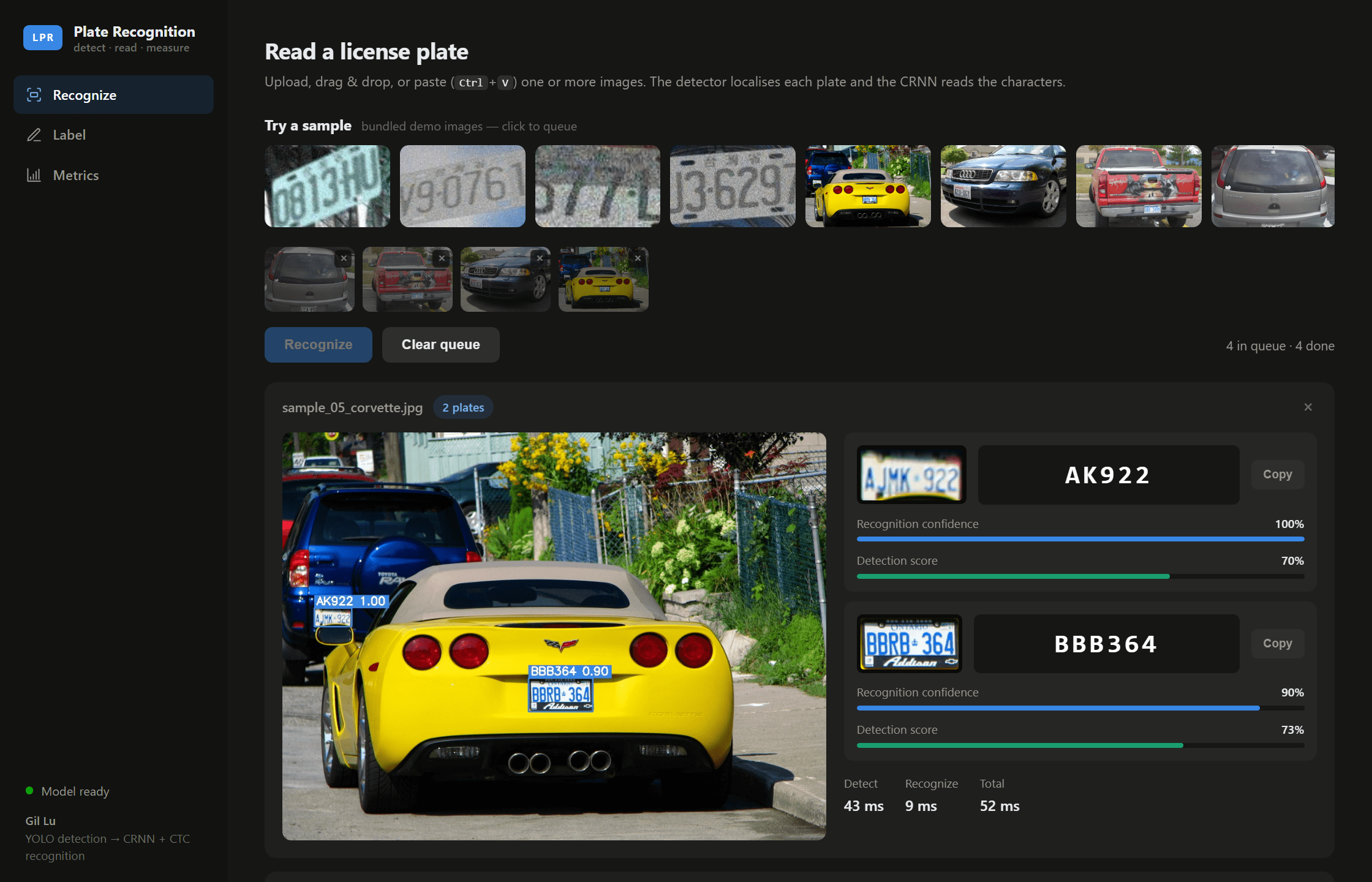
This is a Flask-based computer vision platform that takes raw vehicle imagery in one end and produces structured license-plate data out the other. It chains YOLOv5 object detection with Tesseract OCR: the detector localizes plates in the frame, the OCR stage reads them, and the pipeline emits clean, structured records.
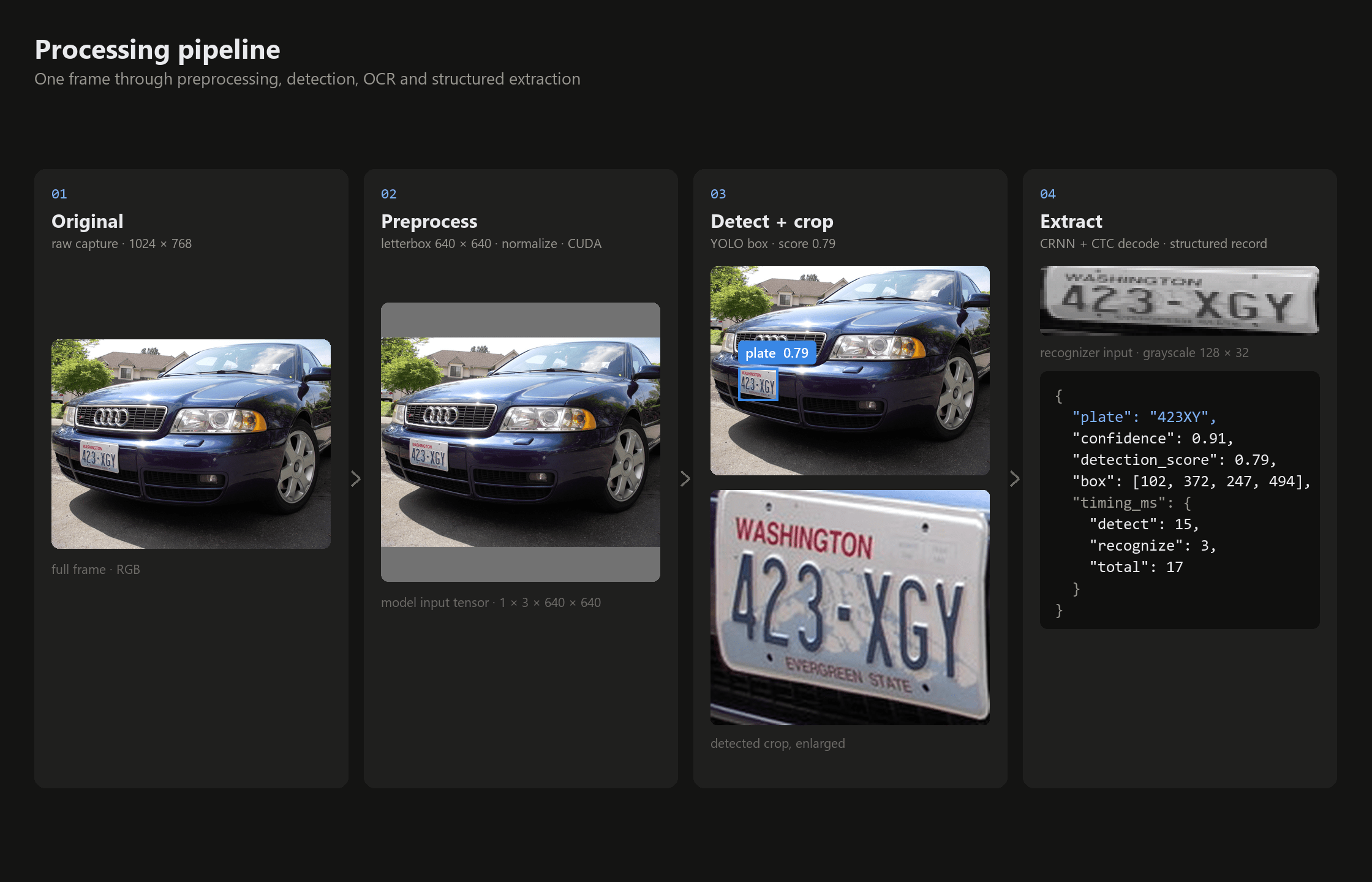
The system is built as an end-to-end data pipeline: image preprocessing, CUDA-accelerated inference for throughput, and structured extraction all run as stages behind a Flask API.
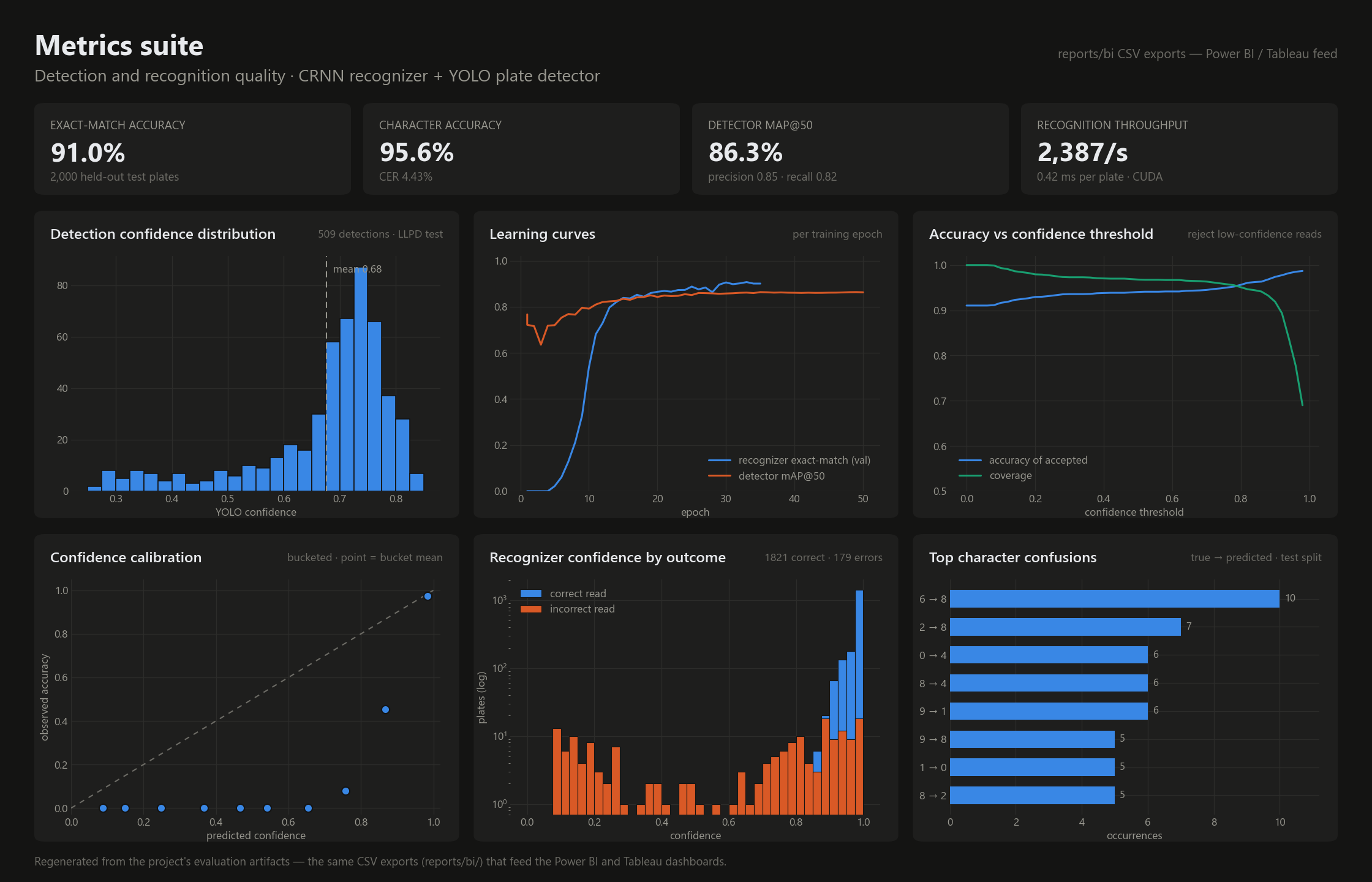
Model performance isn't a footnote: a dedicated metrics suite tracks detection and recognition quality, and feeds Power BI and Tableau dashboards so accuracy and throughput can be analyzed like any other production metric.
The Problem
Reading a license plate sounds like a solved problem until you meet real imagery: angles, motion blur, lighting, and plate variety break naive approaches quickly. And a model that works isn't enough — you need to know how well it works, on what, and whether it's getting better or worse.
This platform treats recognition as a measurable pipeline: detection, OCR, and extraction as separate stages, each observable, with the metrics wired into the same BI tools an analytics team already uses.
Key Features
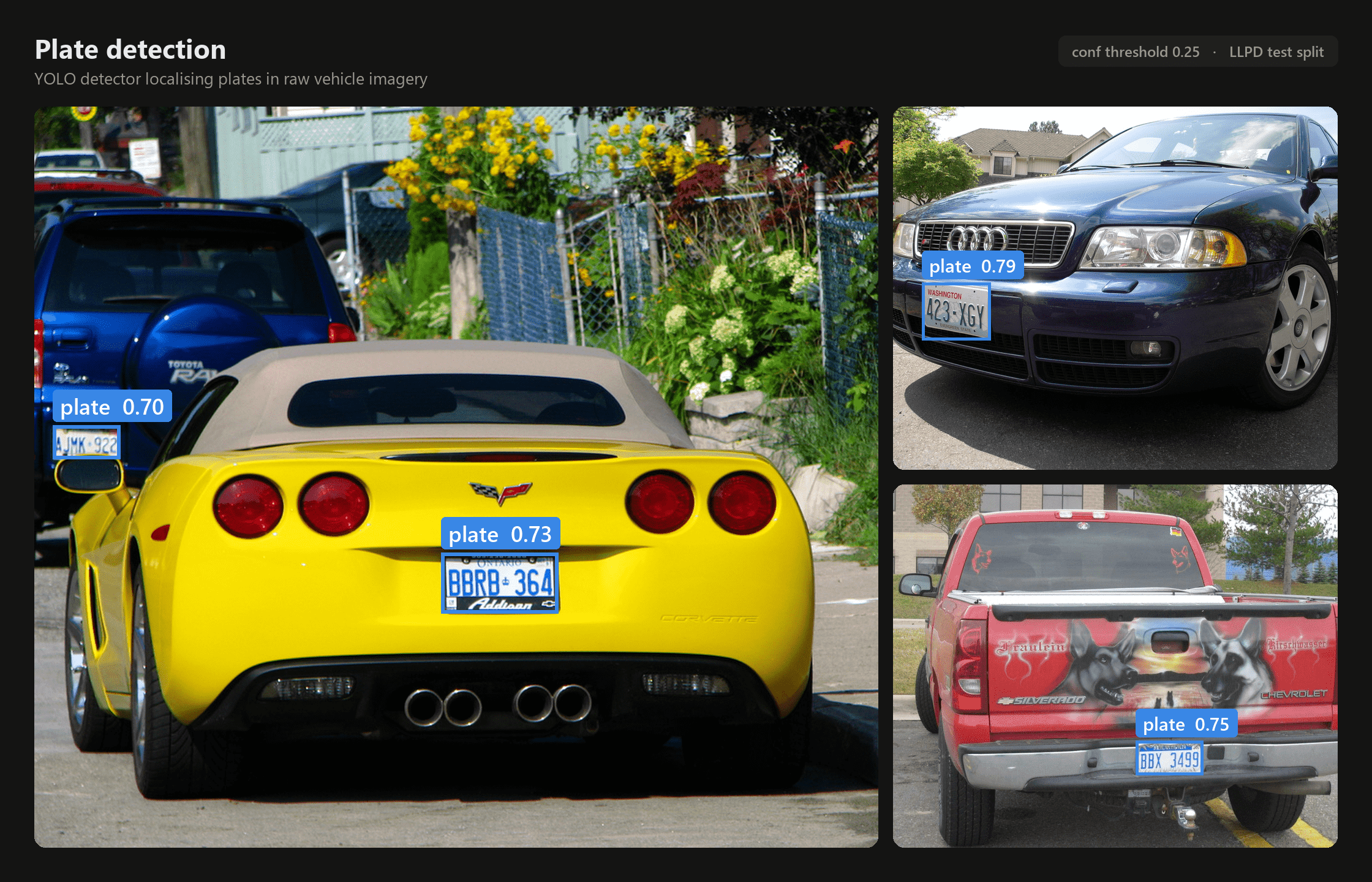
- YOLOv5 plate detection with Tesseract OCR extraction
- Image preprocessing pipeline feeding CUDA-accelerated inference
- Structured data extraction from raw vehicle imagery
- Metrics suite wired into Power BI and Tableau
- Flask API serving the full detection pipeline
Stack
- Python
- Flask
- YOLOv5
- Tesseract OCR
- CUDA
- Power BI
- Tableau
Architecture
Flask serves the detection API: uploaded imagery flows through preprocessing, YOLOv5 localizes plate regions, and Tesseract runs OCR on the cropped detections before results are emitted as structured records.
Inference runs CUDA-accelerated, keeping the pipeline fast enough to process imagery in volume rather than one frame at a time.
Every stage reports into a metrics layer — detection confidence, OCR quality, throughput — which lands in Power BI and Tableau for model performance analysis over time.
Skills Applied
- Computer Vision
- YOLOv5 object detection for plate localization, with an image preprocessing pipeline tuned for real-world vehicle imagery.
- OCR
- Tesseract-based text extraction on cropped plate regions, producing structured records from raw frames.
- Performance
- CUDA-accelerated inference for volume processing.
- Analytics
- A metrics suite tracking detection and recognition quality, integrated with Power BI and Tableau dashboards.
- Backend
- Flask API serving the end-to-end detection pipeline.
Live Demo
A hosted demo is in the works — it will live right here on this page.